North Cyprus Guide
Culture And Cuisine Of North Cyprus
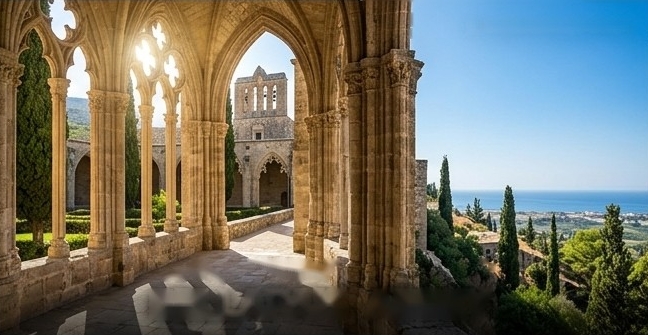
The soul of North Cyprus is in its table and its welcome. This is the island that gave the world halloumi, where a long meze is an evening and a stranger is quickly a guest. From the food to the markets to the restored Ottoman inn of Buyuk Han, this cluster is about how the island lives.
Part of our North Cyprus Guide.</p
In this guide
A Food Lover’s Guide to North Cyprus
Cypriot food is Mediterranean cooking at its most generous. This is the island that gave the world halloumi, served here alongside seftali kebab, slow stews and a long, unhurried meze that keeps arriving until you surrender. Here are the dishes to try first, and how to eat like a local.
The stars: halloumi and seftali kebab
Halloumi – the squeaky brined cheese – turns golden and delicious on the grill and appears at every meal. The local speciality is seftali kebab, herby minced lamb wrapped in caul fat and grilled over charcoal until crisp; the name means peach for its plump shape, not the fruit. Both are best eaten hot off the grill in a village taverna.
The meze experience
The heart of dining here is the meze: a long parade of small hot and cold dishes – dips like hummus and cacik, grilled vegetables, olives, seafood and skewered meats – that arrives in waves. Come hungry, pace yourself, and let it unfold; a good meze is an evening, not a meal.
Stews, pastries and sweets
Look out for molehiya, a slow-cooked green stew with lamb or chicken; pirohu, Cyprus’s own filled ravioli with ricotta; and lahmacun, thin flatbread with spiced minced lamb. Finish with baklava, semolina cake or rice pudding, and the strong local coffee.
Q&A
What is the national dish of North Cyprus?
There is no single dish, but halloumi and seftali kebab are the most iconic, alongside the meze – the long spread of small dishes that defines Cypriot dining.
What is seftali kebab?
A local speciality of herby minced lamb wrapped in caul fat and grilled over charcoal. The name means peach, after its plump shape, not the fruit.
Is halloumi from Cyprus?
Yes – halloumi is a traditional Cypriot cheese, a brined cheese usually grilled or fried, and a staple of the island’s cooking.
The Best Restaurants in Kyrenia
Kyrenia is the dining heart of North Cyprus, from the famous harbour restaurants with their view of the castle to the village tavernas up in the hills. Whether you want fresh fish by the water, a full meze or simple grilled meat, this is where the coast eats best.
The harbour
Kyrenia’s horseshoe harbour is lined with restaurants, and eating here – with the castle lit up and boats on the water – is one of the pleasures of a visit. The setting comes at a small premium, but for fresh fish, meze and a memorable evening it is worth it at least once.
Village tavernas and meze houses
For the best value and the most authentic food, head just out of town to the hillside villages like Bellapais, Ozankoy and Karmi, where family tavernas serve charcoal-grilled meat and generous meze at gentler prices. These are where locals go, and where the seftali kebab is often at its best.
What to order and how to book
Order a mixed meze to share and let the kitchen decide, or go for grilled fish or a seftali kebab. Book ahead in summer and at weekends, especially on the harbour. Many places are relaxed about timing – Cypriot dinners start late and last long.
Q&A
Where is the best place to eat in Kyrenia?
The harbour restaurants for the setting and fresh fish, and the village tavernas above town (Bellapais, Ozankoy, Karmi) for the best-value, most authentic meze and grills.
How much does a meze cost?
Prices are moderate by European standards; harbour restaurants cost a little more for the view, while village tavernas offer generous meze at gentler prices.
Do I need to book?
In summer and at weekends, yes – especially on the harbour. Cypriot dinners start late and run long, so evenings are relaxed.
Turkish Cypriot Culture: A Warm Welcome
Turkish Cypriot culture is the gentle heartbeat of North Cyprus – a Mediterranean blend of Turkish, Cypriot and centuries of island history, defined above all by hospitality. Visitors are struck by how warm, relaxed and unhurried daily life is, and how easily a stranger becomes a guest.
Hospitality and daily life
The first thing people notice is the welcome. A visitor is quickly offered coffee or tea, and hospitality is a point of pride. Life runs at a slower pace – long lunches, shops that close in the afternoon heat, and evenings that spill out onto terraces and harbours. Family and community are central, and elders are treated with real respect.
Language, faith and customs
The language is Turkish, but English is very widely spoken, a legacy of the island’s history, so visitors and residents rarely struggle. The culture is Muslim in tradition but easy-going and secular in daily life; you will hear the call to prayer from a village mosque, then find the cafe next door busy as ever. Modest dress is appreciated when entering mosques.
Coffee, music and festivals
Cypriot coffee – strong, unfiltered, served with a glass of water – is a small ritual worth adopting. Through the year, local festivals celebrate the olive and orange harvests, music and food, and village weddings still fill the streets. It all adds up to a culture that is easy to fall into and hard to leave.
Q&A
What language do they speak in North Cyprus?
Turkish is the main language, but English is very widely spoken and understood, so visitors and foreign residents rarely have difficulty.
What is Turkish Cypriot hospitality like?
Famously warm – visitors are quickly offered coffee or tea, and hospitality is a point of pride. Daily life is relaxed, family-centred and unhurried.
Is it a conservative culture?
It is Muslim in tradition but easy-going and secular in daily life. Modest dress is appreciated at mosques, but everyday life is relaxed and welcoming.
Buyuk Han: The Old Caravanserai and Cultural Scene
Buyuk Han is the finest surviving Ottoman caravanserai on Cyprus – a beautiful sixteenth-century inn in the heart of old Nicosia, its two-storey arcades wrapped around a peaceful courtyard. Once a resting place for travelling merchants, it is now the cultural heart of the old city, full of craft workshops, galleries and courtyard cafes.
A merchants inn reborn
Built in the sixteenth century soon after the Ottomans took the island, Buyuk Han (the Great Inn) gave travelling traders a room upstairs and stabling for their animals below, around a central courtyard with a small domed mosque at its centre. Carefully restored, it is one of the loveliest historic buildings on Cyprus and a joy simply to sit in.
Crafts, art and coffee
Today the little rooms around the arcades house artists studios, craft and jewellery workshops, galleries and gift shops selling local work. The courtyard cafes serve Cypriot coffee and gozleme under the arches – a perfect pause while exploring the walled old city of Nicosia around it.
Exploring old Nicosia
Buyuk Han sits within the walled old town of North Nicosia, a warren of narrow streets, the grand Selimiye Mosque (a converted Gothic cathedral), covered markets and crossing points to the south. It makes a rewarding half-day of history, crafts and coffee away from the coast.
Q&A
What is Buyuk Han?
A beautifully restored sixteenth-century Ottoman caravanserai (merchants inn) in old Nicosia, now home to craft workshops, galleries and courtyard cafes – the cultural heart of the old city.
Is Buyuk Han worth visiting?
Yes – it is one of the loveliest historic buildings on Cyprus, free to wander, with crafts, art and coffee under the arches, in the heart of walled old Nicosia.
Where is Buyuk Han?
In the walled old town of North Nicosia (Lefkosa), the island’s capital, an easy day trip inland from the north coast.
Shopping and Local Markets in North Cyprus
Shopping in North Cyprus is at its best away from the malls – in the weekly village markets piled with sun-ripened produce, the shops selling local olive oil, halloumi and wine, and the craft workshops of the old towns. It is where you taste and take home the real flavour of the island.
Village and town markets
Most towns and larger villages hold a weekly market where farmers bring fruit, vegetables, herbs, eggs, olives and cheese straight from the land. They are cheap, seasonal and full of life – the place to buy a week’s produce and chat with the growers. Ask locally for the day; each area has its own.
Local flavours to take home
Look for the island’s own products: golden olive oil, fresh and matured halloumi, carob syrup, dried herbs, local wine and citrus in season. Small producers and roadside stalls often sell the best, and prices are a fraction of what the same quality costs abroad.
Crafts and gifts
For gifts and crafts, the workshops of Buyuk Han in Nicosia and the old towns of Kyrenia and Famagusta offer handmade jewellery, ceramics, textiles and art. They make for far more memorable souvenirs than anything in a chain store, and support local makers.
Q&A
Where are the best markets in North Cyprus?
The weekly village and town produce markets are the best – cheap, seasonal and full of local fruit, vegetables, olives and cheese. Ask locally for each area’s market day.
What local products should I buy?
Olive oil, halloumi, carob syrup, local wine, dried herbs and citrus in season – plus handmade crafts from Buyuk Han and the old towns.
Is shopping cheap in North Cyprus?
Local produce and markets are very good value, often a fraction of European prices; imported goods can cost more. Markets and small producers offer the best deals.