North Cyprus Guide
Lifestyle And Living In North Cyprus
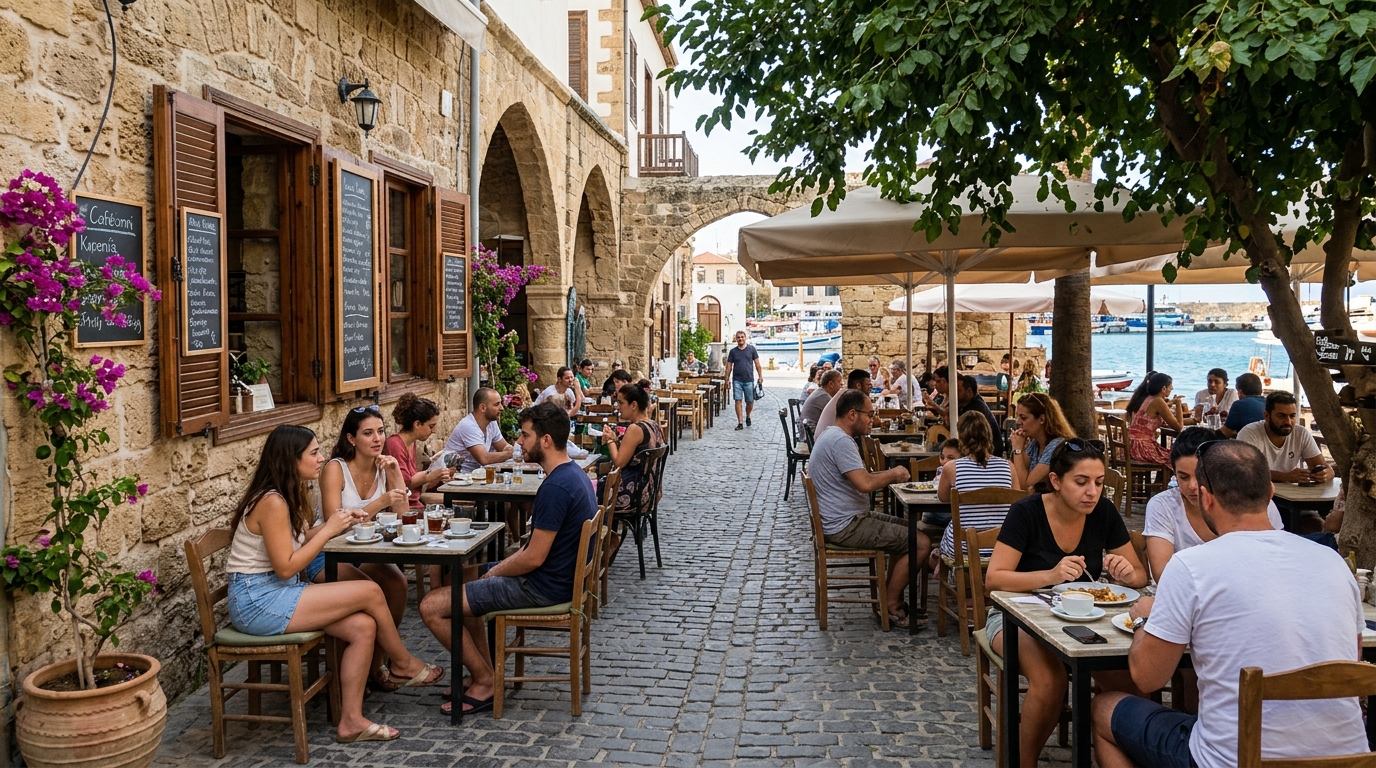
Beyond the beaches and history, North Cyprus is somewhere people genuinely live well – warm weather, low costs, English widely spoken and a friendly community. This cluster answers the practical questions anyone weighing a longer stay will ask.
Part of our North Cyprus Guide.</p
In this guide
The Cost of Living in North Cyprus
One of the biggest draws of North Cyprus is how far your money goes. Rent, food, eating out and running a car all cost noticeably less than in the UK, most of Europe and the south of the island – which is why so many visitors start doing the maths on staying. Here is an honest look at the everyday numbers.
Everyday costs
Local markets make fresh fruit, vegetables, halloumi and olive oil very affordable, and eating out is a genuine pleasure rather than a splurge – a full meze with drinks costs a fraction of a comparable meal in western Europe. Imported and branded goods cost more, so shopping local is both cheaper and better.
Housing and bills
Renting or buying is where the difference is starkest: your budget buys far more coastline here than in Spain, southern France or southern Cyprus. Utilities are reasonable, though summer air-conditioning and winter heating add to bills, and water and electricity should be budgeted for.
Transport and lifestyle
A car is more or less essential and running one is affordable, with modest fuel prices. Add it all up and a comfortable Mediterranean lifestyle – sunshine, sea, eating out, a home near the coast – is achievable here on a budget that would stretch much thinner elsewhere, which is a large part of the island’s appeal to retirees and remote workers.
Q&A
Is North Cyprus cheap to live in?
Yes, relative to the UK, most of Europe and southern Cyprus – rent, food, eating out and running a car all cost noticeably less, though imported goods cost more.
Can you live on a pension in North Cyprus?
Many retirees do, drawn by the low cost of living and warm climate. Careful budgeting for housing, utilities and healthcare makes a comfortable lifestyle achievable.
What costs more than expected?
Imported and branded goods, summer air-conditioning and winter heating, and private healthcare. Shopping at local markets keeps everyday costs low.
Healthcare in North Cyprus
Healthcare is a common question for anyone thinking of spending real time in North Cyprus, and the answer is reassuring: there is a mix of public and modern private hospitals and clinics, many English-speaking doctors, and private care that is good value by European standards. Here is what to expect and how to plan.
Public and private care
There is a state healthcare system alongside a growing number of private hospitals and clinics, particularly around Kyrenia, Nicosia and Famagusta. Most foreign residents use private care for its shorter waits, modern facilities and English-speaking staff – and find it noticeably cheaper than equivalent private care in the UK or much of Europe.
Doctors, dentists and pharmacies
English is widely spoken in the medical world, and many doctors trained abroad, so communication is rarely a barrier. Dentistry and optical care are well regarded and popular even with visitors for their value. Pharmacies are plentiful and staff can advise on minor ailments; many medicines are available over the counter.
Insurance and planning
Visitors should travel with insurance, and residents typically take out private health insurance, which is affordable relative to western Europe. For anyone relocating, it is worth registering with a local GP or clinic on arrival and keeping a note of the nearest private hospital.
Q&A
Is healthcare good in North Cyprus?
Yes – there is a mix of public and modern private hospitals and clinics, many English-speaking doctors, and private care that is good value compared with much of Europe.
Do doctors speak English?
Widely, yes – English is common in the medical world and many doctors trained abroad, so communication is rarely a problem for foreign residents and visitors.
Do I need health insurance?
Visitors should have travel insurance, and residents usually take out private health insurance, which is affordable by European standards.
International Schools in North Cyprus
For families thinking of moving, schooling matters – and North Cyprus offers a good choice of private and international schools teaching in English, alongside well-regarded universities. Education is one of the island’s quiet strengths, and a reason many relocating families feel confident about the move.
English-language and international schools
There are private and international schools, mainly around Kyrenia, Nicosia and Famagusta, teaching in English and following international or British-style curricula. Class sizes tend to be small, and the mix of nationalities gives children an international, friendly environment. Fees are generally lower than comparable private schools in the UK or western Europe.
Choosing a school
Curriculum, location and the school community are the main things to weigh. It is worth visiting in person, talking to other expat parents, and checking exam results and onward destinations. Places at the most popular schools can fill up, so families relocating for a school year should enquire well ahead.
Universities
North Cyprus is also a notable university destination, with several large international universities drawing students from around the world. For older teenagers, the presence of higher education on the island, taught largely in English, can be an added attraction for a relocating family.
Q&A
Are there English-speaking schools in North Cyprus?
Yes – there are private and international schools, mainly around Kyrenia, Nicosia and Famagusta, teaching in English and following international or British-style curricula.
How much are school fees?
Fees vary by school but are generally lower than comparable private schools in the UK or western Europe. Confirm current fees directly with each school.
Are there universities in North Cyprus?
Yes – the island has several large international universities, taught largely in English, drawing students from around the world.
A Guide to Residency Permits in North Cyprus
If you plan to live in North Cyprus rather than just visit, you will need a residence permit – and the process is more straightforward than many expect. This guide explains who needs one, the main routes (retirement, property ownership, work), and how to approach it. Always confirm the current rules, as they can change.
Who needs a permit
Visitors can usually stay for a limited period on entry, but anyone intending to live on the island long-term applies for a residence permit. Buying a property does not automatically grant residency, but it is one of the common bases for applying, alongside retirement income and employment.
The main routes
The most common paths are: a retirement or no-employment permit for those with sufficient income or pension; a permit based on property ownership; and work or business permits for those employed or running a company here. Each has its own requirements around income, health checks and documentation.
The process and getting help
Applications typically involve a health check, proof of income or property, address registration and a set of documents, submitted to the immigration authorities. Because the paperwork and rules can change, most newcomers use a local lawyer or a relocation service to handle it smoothly – well worth it for peace of mind on your first application.
Q&A
Do I need a residence permit to live in North Cyprus?
Yes – visitors can stay short-term on entry, but anyone living on the island long-term applies for a residence permit, commonly via retirement income, property ownership or work.
Does buying property give you residency?
Not automatically, but property ownership is one of the common bases for applying for a residence permit. Confirm the current criteria before relying on this.
Is the process difficult?
It is more straightforward than many expect, though it involves a health check and documentation. Most newcomers use a local lawyer or relocation service to handle it.